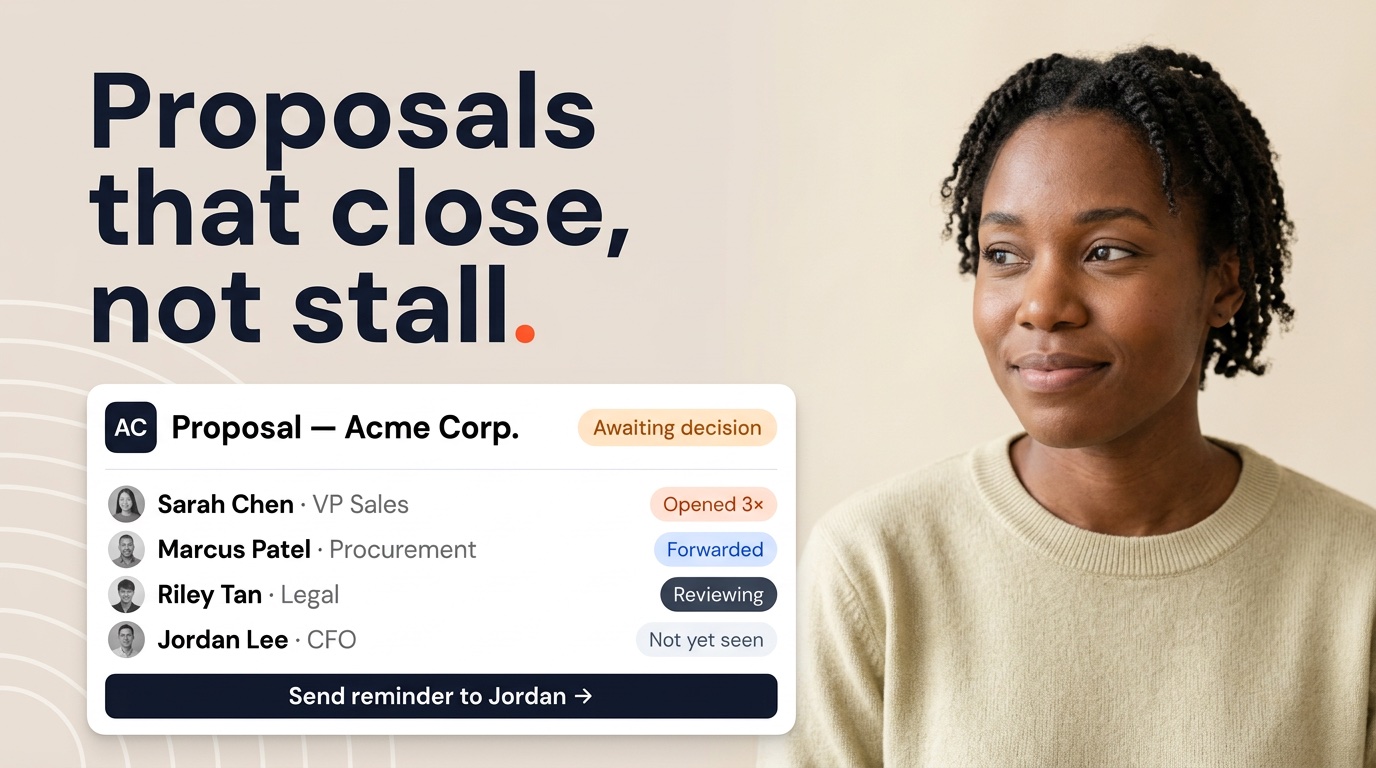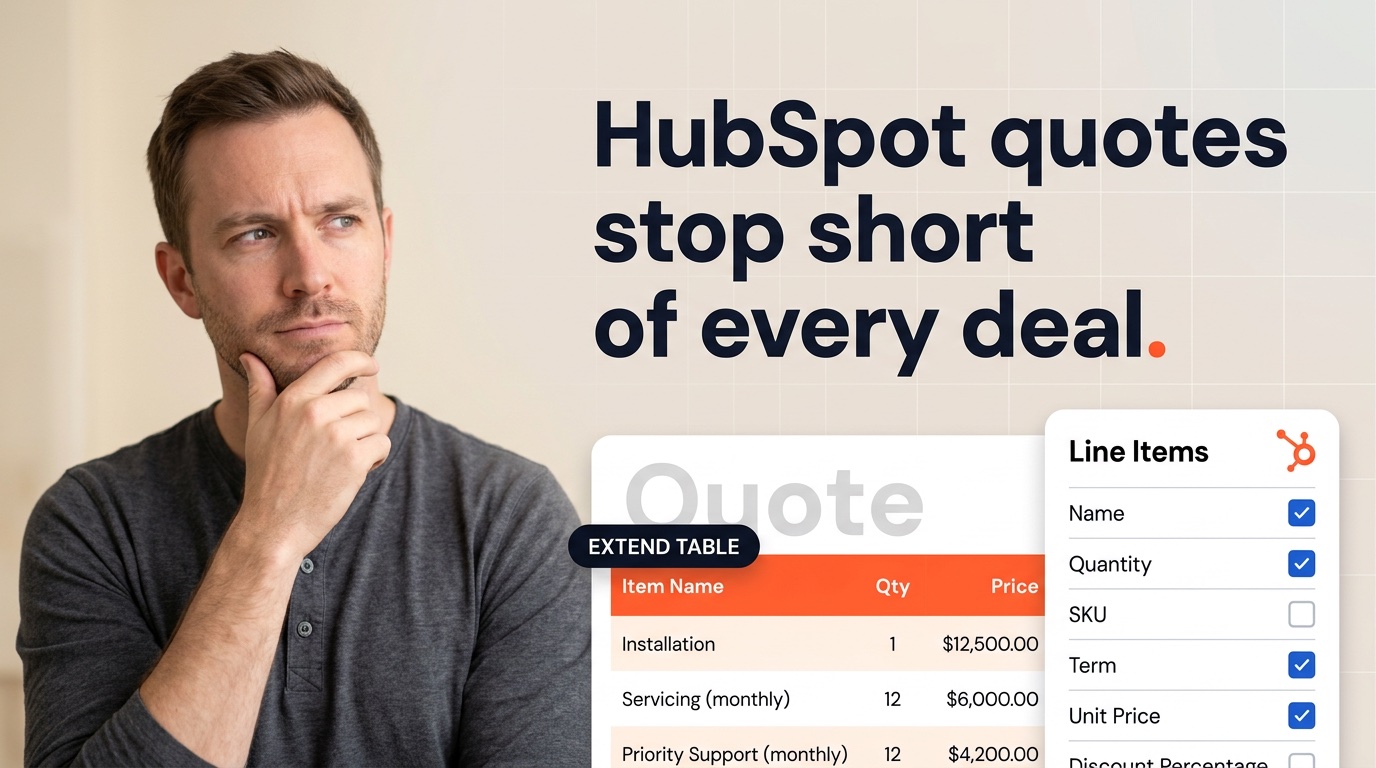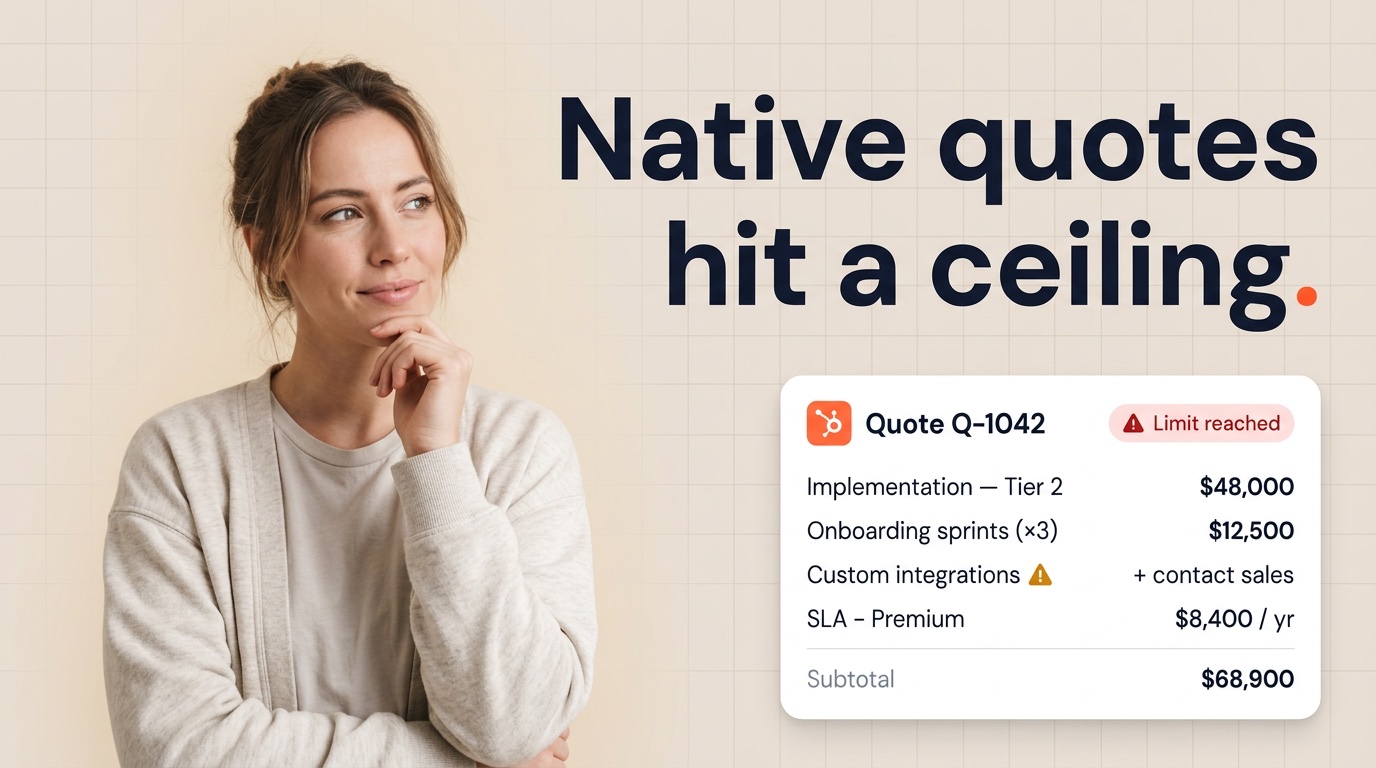


Agiloft is enterprise contract lifecycle management built for legal and procurement teams — not for sales reps trying to close deals. Implementation takes months, costs six figures, and requires a dedicated admin to configure. There's no native HubSpot integration. And the governance features that make Agiloft powerful for legal teams are exactly what make it the wrong tool for a sales team that needs to generate a proposal, get it approved, and collect a signature before the end of the quarter.
I work at Portant, so I'll be upfront about that. But I also spend most of my time inside customer HubSpot portals, and I've seen firsthand why HubSpot teams end up evaluating alternatives after a painful Agiloft implementation. This article evaluates 10 alternatives honestly — including where each one is a better fit than Portant and where it isn't. I scored them on four criteria: HubSpot integration depth, template flexibility, pricing at a five-user team, and end-to-end document workflow.
Why HubSpot teams look for Agiloft alternatives
Agiloft is the right tool if your legal team runs contracts with complex governance requirements, obligation tracking, and redlining workflows. It's the wrong tool if your sales team needs to send one. The gap between those two use cases is where most of the frustration lives.
The first issue is integration. Agiloft is natively built for Salesforce. Connecting it to HubSpot requires custom API development that isn't included in the platform — you're paying for engineering time before a single document goes out. For a sales team that wants to generate a proposal from a deal record, that's a significant obstacle that doesn't exist with tools built for HubSpot.
The second issue is setup time. Agiloft's extreme configurability is a genuine strength for enterprise legal teams. For a sales team, it means weeks of configuration — defining contract types, approval trees, user roles, and clause libraries — before anyone can generate a document. Teams that need to be operational quickly find this disproportionate to the workflow they're actually trying to run.
The third issue is cost and fit. At approximately $65 per user per month, a five-person team is looking at $325 a month plus the cost of the HubSpot integration work. That's a significant investment for a tool whose primary use case is CLM governance that most sales teams don't need. When all you want to do is generate a proposal from a deal, get it approved, and send it for signature, there are much faster and cheaper paths.
Quick comparison
| Tool | Best for | HubSpot integration | Starting price | Free plan | G2 |
|---|---|---|---|---|---|
| Portant | HubSpot-native doc automation | Native (certified app) | $42/mo workspace | Yes (30 credits/mo) | 4.7/5 |
| PandaDoc | Editor-first proposals + eSign | Integration (sync) | $49/user/mo | No | 4.7/5 |
| Juro | Legal-led contract workflows | Integration (sync) | Custom | No | 4.7/5 |
| Ironclad | Enterprise CLM for legal teams | Integration (sync) | Custom | No | 4.5/5 |
| Conga | Enterprise CPQ + CLM | Integration (sync) | Custom | No | 4.3/5 |
| DocuSign | Enterprise eSign compliance | Connector (envelope sync) | $45/user/mo | No | 4.5/5 |
| GetAccept | Sales engagement + docs | Integration (sync) | Custom | No | 4.6/5 |
| Nintex | Process automation + docs | Integration (via connector) | Custom | No | 4.3/5 |
| HubSpot Quotes | Free native quotes | Native (built into HubSpot) | $0 with Sales Hub | Yes | 4.4/5 |
| Oneflow | Interactive contracts + eSign | Integration (sync) | $35/user/mo | No | 4.6/5 |
G2 ratings as of May 2026. Prices shown are billed annually where applicable — check each vendor's site for current rates.
 1. Portant — best for HubSpot-native document automation
G2: 4.7/5 · From $42/mo workspace · Free plan: Yes (30 credits/mo)
Portant is purpose-built for teams that use HubSpot as their primary system of record and want documents to live there too — not alongside it in a separate CLM platform that requires a dedicated admin to maintain. It's the #1 HubSpot-certified document automation app, used by over 920,000 people across tens of thousands of teams.
The core difference from Agiloft starts at the integration level. Agiloft has no native HubSpot integration — connecting the two requires custom API development work that isn't included in the platform. Portant is a certified HubSpot Marketplace app. You install it, connect your templates, and your team is generating documents from live deal data the same day. No professional services engagement, no six-figure implementation budget, no waiting months to go live.
The second difference is what you can use as a template. Agiloft uses its own contract editor and template system — if your legal team has signed off on a Google Docs or Word layout, that work doesn't transfer. Portant works directly with the files your team already has: Google Docs, Slides, Word, PowerPoint, and existing PDFs. Merge tags pull in deal, contact, company, line item, and custom property data. Legal's approved language and branding stay exactly as they are.
The third difference is where the document lives after it's sent. In Agiloft, contracts live in Agiloft — which means your HubSpot pipeline doesn't reflect what's actually happening in the document workflow unless someone manually updates it. With Portant, every document is saved back to HubSpot as its own record. Deal timelines, workflows, and dashboards reflect document status, eSign completion, and approval stages without anyone switching tabs or manually syncing data.
For teams that need conditional content, Portant supports logic that shows or hides sections based on HubSpot field values — so a contract for a high-value enterprise deal can automatically include different terms than one for a standard SMB engagement, without anyone editing the template by hand. Line item tables pull directly from HubSpot products, so quotes and proposals reflect accurate pricing without manual entry.
Key features
- Generates documents from live HubSpot deal, contact, company, and line item data
- Templates in Google Docs, Slides, Word, PowerPoint, or PDF — no proprietary editor or rebuilding required
- Every document saved back to HubSpot as its own record with full status history
- Sequential approval workflows with one-click approve/reject from inside HubSpot
- Built-in eSignature on paid plans — signing status updates HubSpot at each step
- Automation triggers: generate documents when deal stages change, forms are submitted, or workflows fire
- Conditional content logic — show or hide sections based on HubSpot field values
- Dynamic line item tables pulled directly from HubSpot products
Pros
- Native HubSpot integration from day one — no custom development, no integration overhead
- Operational the same day you install it — no weeks of configuration before generating a document
- No template migration — your existing Google Docs and Word files work as-is
- Documents as HubSpot records means reporting, list-building, and workflow automation work natively
- Flat workspace pricing means your whole team is covered without per-seat penalties as you grow
Cons
- No visual drag-and-drop builder — if reps want to design rich layouts from scratch inside the tool, the template-file approach feels less visual than PandaDoc or Proposify
- Not a full CLM — if your use case genuinely requires obligation tracking, redlining, and complex clause governance, a dedicated CLM like Juro or Ironclad is a better fit
- Document volume is credit-based on lower plans (30 credits/mo free, 2,000/mo on Pro)
Pricing: Free (30 credits/mo), Pro $42/mo workspace (2,000 credits/mo, billed annually), Team $125/mo flat for 5 users. No per-seat pricing on Pro — your whole team is included.
For a 5-person team: $125/mo on Portant Team vs approximately $325/mo on Agiloft Professional — before factoring in the cost of custom HubSpot integration work that Agiloft requires.
For a detailed side-by-side, our Portant vs Agiloft comparison page covers features, integration depth, setup time, and pricing in full.
 2. PandaDoc — best for editor-first proposals and eSign
G2: 4.7/5 · From $49/user/mo · Free plan: No
PandaDoc is the most direct sales-facing alternative to Agiloft for HubSpot teams. Where Agiloft is built for legal and procurement governance, PandaDoc is built for sales reps — a polished drag-and-drop editor, built-in eSignature, an interactive pricing table, and a content library all in one platform. If your team wants to create visually rich proposals and send them without involving engineering, PandaDoc is a reasonable starting point.
The HubSpot integration lets you pull deal data into PandaDoc templates and syncs document activity back to the CRM. It's a meaningful step up from Agiloft's zero native HubSpot support. That said, documents live in PandaDoc — not in HubSpot — so pipeline reporting still means opening a second dashboard to see what's actually happening.
Key features
- Drag-and-drop block editor with a reusable content library
- Interactive pricing tables and configurable quote line items
- Built-in eSignature with audit trail and multi-signer support
- HubSpot integration: deal data in, document status and activity back out
- Approval workflows and real-time recipient notifications
Pros
- Purpose-built for sales teams — richer editor and more polished output than CLM tools
- HubSpot integration is meaningfully better than Agiloft's (which has none natively)
- Content library makes it easy for teams to reuse approved sections across proposals
Cons
- Per-seat pricing at $49/user/mo — a 5-person team pays $245/mo on the Business plan
- Templates must be rebuilt in PandaDoc's editor — existing Google Docs or Word files don't transfer
- Documents live in PandaDoc, not HubSpot — deal reporting requires leaving the CRM
Pricing: Business plan at $49/user/month (billed annually). HubSpot integration, approvals, and custom fields require the Business tier or above. No free plan.
Best for: sales teams switching from Agiloft who want a familiar, editor-first document experience with better eSign and a stronger HubSpot integration than they had before. If HubSpot staying the source of truth matters, PandaDoc's CRM sync may still feel too shallow — consider Portant for that requirement.
 3. Juro — best for legal-led contract management
G2: 4.7/5 · Custom pricing · Free plan: No
Juro is the most direct functional overlap with Agiloft that remains relevant for commercial teams using HubSpot. It's a contract lifecycle management platform built around a collaborative browser-based editor where sales, legal, and counterparties can all negotiate in the same document. Where Agiloft is configured for procurement-heavy enterprise workflows, Juro is oriented toward commercial teams who need legal visibility without entirely separate tooling.
The HubSpot integration lets you generate contracts from deal data and sync signed contract status back. For teams where legal involvement in deals is routine rather than exceptional, Juro is a step down in complexity from Agiloft without sacrificing the collaboration and redlining features that legal teams value.
Key features
- Browser-based collaborative editor with real-time redlining and clause negotiation
- Pre-approved clause library for legal teams to control outgoing contract language
- Contract lifecycle tracking — drafts, in review, out for signature, signed, renewals
- eSign with full audit trail and signer verification
- HubSpot integration: generate from deals, sync contract status back
Pros
- Best-in-class collaborative redlining — counterparties negotiate directly in the document
- Clause library gives legal real control over what language goes out the door
- More commercially focused than Agiloft — better fit for joint sales-legal workflows
Cons
- Enterprise pricing and a sales-led evaluation process — no self-serve signup
- More complexity than most HubSpot sales teams need for standard, non-negotiated agreements
- Documents live in Juro, not HubSpot — pipeline reporting still requires switching tools
Pricing: Custom — Juro doesn't publish rates publicly. Positioned at mid-market and enterprise. Expect a sales process before getting a number.
Best for: companies switching from Agiloft where legal involvement in commercial deals is regular and the collaboration and redlining features are genuinely needed — not teams who send standard agreements that rarely require negotiation.
 4. Ironclad — best for enterprise CLM with legal workflows
G2: 4.5/5 · Custom pricing · Free plan: No
Ironclad is an enterprise CLM platform used by large legal and commercial operations teams. If you're evaluating Agiloft alternatives and the reason you were considering CLM in the first place was genuine — complex approval chains, obligation management, counterparty redlining, and legal team buy-in — Ironclad is a serious contender at the same tier.
The HubSpot integration covers deal and contact data flowing into contract workflows, with status updates syncing back. Like Agiloft, Ironclad is designed with legal as the primary owner of the platform. Sales teams interact through self-service contract generation workflows, but the configuration and administration sits in legal operations.
Key features
- Workflow designer for complex, multi-step contract creation and approval chains
- AI-assisted contract review and risk flagging
- Counterparty negotiation and redlining directly in the platform
- Obligation tracking and renewal management across the contract portfolio
- HubSpot integration: deal data in, contract status and milestones back out
Pros
- One of the most capable enterprise CLM platforms on the market for legal-led workflows
- Strong AI features for contract review and risk identification
- Well-regarded for complex, multi-party contracts with high-stakes obligations
Cons
- Enterprise pricing and a complex implementation — not appropriate for teams that need a faster, lighter solution
- Primarily a legal platform — sales teams use it through guided workflows but don't own it
- Overkill for teams that mainly need proposals, standard contracts, and eSign from HubSpot
Pricing: Custom — enterprise-level, requires a full sales and implementation engagement. Not suitable for self-serve evaluation.
Best for: large organisations switching from Agiloft where legal genuinely needs an enterprise CLM and the implementation overhead is acceptable. Not the right choice for sales teams who want to move faster and at lower cost.
 5. Conga — best for enterprise CPQ and CLM on HubSpot
G2: 4.3/5 · Custom pricing · Free plan: No
Conga is an enterprise revenue operations platform that covers CPQ (configure, price, quote), document generation, and contract lifecycle management in one suite. For teams that are evaluating Agiloft because they need CPQ as well as CLM, Conga is one of the few platforms that tries to cover the whole revenue operations stack rather than just contracts.
Conga has a HubSpot integration that allows deal and quote data to flow into document generation and contract workflows. That said, Conga was originally built around Salesforce and the HubSpot integration is not at the same depth as its Salesforce implementation. Teams who have evaluated both typically note that Conga on HubSpot requires more configuration effort to achieve the same outcome.
Key features
- CPQ (configure, price, quote) engine for complex product and pricing configurations
- Document generation from CRM data with merge and conditional logic
- Contract lifecycle management with approval chains and obligation tracking
- eSign and contract negotiation built into the platform
- HubSpot integration covering deal, quote, and contract data flow
Pros
- One of the few platforms that covers CPQ, document generation, and CLM in a single suite
- Strong enterprise feature set for revenue operations teams with complex pricing and approval logic
- Broad integration ecosystem for large organisations with multiple connected systems
Cons
- Lowest G2 rating among the CLM/CPQ tools on this list — users frequently cite complexity and UX friction
- HubSpot integration is not as mature as its Salesforce implementation
- Implementation is a major project — not suitable for teams wanting to move quickly
Pricing: Custom — enterprise pricing across the CPQ, document, and CLM modules. No published rates. Requires a sales engagement.
Best for: enterprise revenue operations teams with complex CPQ requirements who need a single platform covering quoting, document generation, and contract management — and who have the implementation budget to match.
 6. DocuSign — best for enterprise eSignature compliance
G2: 4.5/5 · From $45/user/mo · Free plan: No
DocuSign is the category standard for electronic signatures. If your primary reason for evaluating Agiloft was to get legally compliant, auditable signatures on contracts that are created elsewhere, DocuSign covers that specific requirement better than most alternatives — at a lower cost and with broader enterprise and procurement recognition than Agiloft's built-in signing.
DocuSign does not generate documents from CRM data. You upload a PDF or Word file, add signature fields, and send. The HubSpot connector syncs envelope status back — sent, viewed, completed, declined — but it's a narrower integration than a full document automation tool. If you also need to generate contracts from deal data, you'd pair DocuSign with a document generation tool rather than use it standalone.
Key features
- Industry-standard eSign with SOC 2, ISO 27001, eIDAS, and ESIGN Act compliance
- Granular audit trail — IP address, timestamp, and signer identity for every action
- HubSpot connector: envelope events sync back to deal or contact records
- In-person signing, SMS-based identity verification, and bulk send on higher plans
- DocuSign CLM available as a separate, more expensive module for contract management
Pros
- Widest enterprise recognition — buyers and procurement teams almost universally accept DocuSign envelopes
- Best-in-class compliance certifications for regulated industries
- Reliable and mature platform with a large integrations ecosystem
Cons
- Does not replace Agiloft as a document creation or CLM tool — it covers eSign only
- HubSpot integration is connector-level: envelope status syncs, but documents don't live as HubSpot records
- Per-seat pricing — a 5-person team on the Standard plan pays $225/mo
Pricing: Standard at $45/user/month (billed annually). Business Pro at $65/user/month. Enterprise pricing by contract. No free plan — 30-day trial available.
Best for: teams in regulated industries where buyer recognition and compliance certification matter, and where documents are already created in another system before they need to be signed. Pair with Portant if you also need to generate those documents from HubSpot deal data.
 7. GetAccept — best for sales engagement plus document automation
G2: 4.6/5 · Custom pricing · Free plan: No
GetAccept combines document automation with sales engagement features — video messaging, live chat inside proposals, and buyer-side engagement tracking. It sits in a different category from Agiloft: where Agiloft is oriented toward legal governance, GetAccept is oriented toward keeping prospects engaged throughout the deal cycle, with document creation and eSign as components of a broader sales room experience.
The HubSpot integration is solid and covers activity logging, deal updates, and status sync. Pricing is custom and requires a demo call, which reflects a mid-market and enterprise positioning. Teams looking for self-serve setup will find that friction early.
Key features
- Document editor with embedded video, live chat, and buyer engagement notifications
- Contract management with clause library and redlining capability
- Built-in eSign with detailed audit trail
- HubSpot integration: deal data in, activity and document status back out
- Buyer-side engagement tracking — see when, how long, and which sections were reviewed
Pros
- Unique combination of engagement tools (video, chat) alongside document creation and eSign
- Strong for complex, multi-stakeholder deals where buyer engagement between touchpoints matters
- Solid audit trails and contract management for teams with moderate legal requirements
Cons
- Custom pricing means no self-serve — you need a sales conversation before getting a number
- The engagement feature set adds complexity that's overkill for teams sending standard contracts or quotes
- Less HubSpot-native than tools built specifically for the HubSpot ecosystem
Pricing: Custom — requires a demo. Generally positioned at mid-market and above. No published per-seat rate.
Best for: mid-market sales teams with longer deal cycles, multiple stakeholders, and a genuine need to track buyer engagement throughout the sales process — not just at the point of signing.
 8. Nintex — best for process automation with document generation
G2: 4.3/5 · Custom pricing · Free plan: No
Nintex is an enterprise process automation platform that includes document generation as part of its broader workflow automation suite. It sits in a similar category to Agiloft in terms of implementation overhead and enterprise orientation, but comes from the process automation side rather than the contract management side. Teams that were drawn to Agiloft for its process governance capabilities sometimes evaluate Nintex as an alternative.
HubSpot integration for Nintex typically requires connector setup rather than a native app, which adds configuration effort. Nintex is a strong platform for large organisations with complex document generation needs embedded in multi-step business processes, but it's not a natural fit for sales teams wanting fast, HubSpot-native document workflows.
Key features
- Enterprise process automation with document generation built in
- Document generation from data sources including CRM, ERP, and databases
- eSign capability through Nintex Sign (powered by Adobe Sign)
- Workflow automation across systems with conditional branching and approvals
- Connector-based HubSpot integration for CRM data flow
Pros
- Strong for complex, multi-step document workflows embedded in larger business processes
- Broad integration ecosystem across enterprise systems beyond just CRM
- Capable of handling high-volume, complex document generation scenarios
Cons
- Significant implementation overhead — not appropriate for teams wanting quick time-to-value
- HubSpot integration is not native — connector setup required
- Lower G2 rating on this list, with users citing complexity and configuration effort
Pricing: Custom — enterprise pricing across multiple product tiers. No published rates. Requires a sales engagement.
Best for: large enterprises with complex, cross-system process automation requirements where document generation is one component of a broader business process — not sales teams who need to generate and send a proposal in minutes.
 9. HubSpot Quotes — best for free native quoting
G2: 4.4/5 (Sales Hub) · $0 with Sales Hub · Free plan: Yes
HubSpot Quotes is the built-in quoting tool inside HubSpot Sales Hub. It doesn't require any integration because it is HubSpot — quotes pull in deal and line item data, generate a shareable link or PDF, and record acceptance back to the deal record natively. For teams coming from Agiloft who want zero additional tooling cost and just need basic quoting, HubSpot Quotes is already in your portal and costs nothing extra.
The limitations are real compared to even Agiloft's scope: no complex custom templates, no approval workflows beyond basic HubSpot logic, no eSign without additional HubSpot add-ons, and no support for non-quote document types like proposals, contracts, or NDAs. It's quoting, not document automation, and certainly not contract lifecycle management.
Key features
- Pull deal, contact, and line item data directly — no mapping or integration required
- Branded quote templates with your company logo and colours
- Quote acceptance recorded directly on the HubSpot deal record
- Payment collection via HubSpot Payments (US) or Stripe integration
- Included with HubSpot Sales Hub Starter, Professional, and Enterprise
Pros
- Zero additional cost if you're already on HubSpot Sales Hub
- Deepest HubSpot data connection of any tool on this list — it's native
- No setup required — it's already in your portal waiting to be used
Cons
- Templates are limited — no support for custom Google Docs or Word layouts
- Quotes only — not suitable for contracts, proposals, NDAs, or SOWs
- No built-in eSign without additional HubSpot add-ons
- No multi-step approval routing or complex document logic
Pricing: Included at no extra cost with HubSpot Sales Hub Starter ($20/mo+), Professional, and Enterprise. eSign requires a separate HubSpot add-on.
Best for: HubSpot teams that only need simple quotes and want a zero-cost starting point before investing in a dedicated document tool. Use it to test your workflow, then graduate to Portant when you need custom templates, approval routing, contracts, or full eSign without the per-seat add-on cost.
 10. Oneflow — best for interactive contracts with built-in eSign
G2: 4.6/5 · From $35/user/mo · Free plan: No
Oneflow is a contract automation platform that takes a different approach to the standard PDF-based workflow: contracts are created and signed as live digital documents rather than static files. Counterparties can view, accept, and sign directly in a browser — no downloading, no printing, no emailing PDF attachments. For teams where the contract experience itself is part of the relationship, the format is genuinely differentiated.
The HubSpot integration covers deal data flowing into Oneflow contracts and status updates syncing back. At $35/user/month it's meaningfully cheaper than Agiloft Professional, and the implementation is significantly lighter. It's not a full CLM — it doesn't cover obligation tracking or complex renewal governance — but for sales-led contract workflows it's a practical, well-priced option.
Key features
- Live digital contract format — no PDF, recipients interact directly in the browser
- eSign and acceptance tracking with full audit trail
- Contract templates with data merge from HubSpot deal and contact fields
- Real-time status visibility — created, sent, opened, signed, declined
- HubSpot integration: deal data in, contract status and signed documents back out
Pros
- Modern digital contract experience that buyers often find easier to engage with than PDF attachments
- Cleaner pricing than Agiloft at $35/user/mo with no custom integration work required
- Good HubSpot integration for a per-seat priced tool in this category
Cons
- Not all counterparties prefer digital-only contracts — procurement teams often require a PDF for internal approvals
- Per-seat pricing — a 5-person team pays $175/mo, which is lower than Agiloft but higher than Portant
- Not a full CLM — limited obligation tracking, renewal management, or complex governance features
Pricing: From $35/user/month (billed annually). No free plan — check Oneflow's site for current plan structure as rates change.
Best for: sales-led teams that want a lighter alternative to Agiloft's CLM overhead, a modern digital contract experience for buyers, and a HubSpot integration that doesn't require custom development.
How to choose the right tool
The fastest way to narrow this list is to be honest about why you were looking at Agiloft in the first place — and whether that reason was ever really about sales team needs or about something else.
If you need sales document automation from HubSpot: Agiloft was never the right starting point. You need a tool that is native to HubSpot, works with the templates you already have, and gets your team generating documents without a months-long implementation project. Portant covers this directly — installed in minutes, operational the same day, documents stored back in HubSpot as records your workflows can act on.
If you genuinely need CLM governance: The alternatives depend on scale. For smaller commercial teams with moderate legal involvement, Juro is a more accessible option than Agiloft at similar functionality. For large enterprise legal departments that need Agiloft-level governance, Ironclad is the closest functional equivalent with better commercial team UX. Conga covers the CPQ-plus-CLM use case if pricing complexity is part of the requirement.
If you need eSign only: DocuSign is the safest choice for compliance and buyer recognition. Oneflow is a good option if you want a more modern signing experience at a lower price point. Neither generates documents from HubSpot data — they're signing layers on top of documents created elsewhere.
How team size affects the decision: Per-seat pricing compounds fast. At five users: Agiloft ($325/mo), PandaDoc ($245/mo), DocuSign ($225/mo), Oneflow ($175/mo) vs Portant Team ($125/mo flat). At ten users, the gap is dramatic. Portant adds $30 per additional user beyond the five included in the Team plan — compared to $65/user on Agiloft and $49/user on PandaDoc.
Quick shortcut: if your team is HubSpot-first and needs to generate proposals, contracts, and quotes from deal data, start with Portant — no integration overhead, no template rebuilding, operational today. If your legal team genuinely owns contracts and needs CLM governance, evaluate Juro or Ironclad. If you only need eSign on documents that are already finalised, DocuSign or Oneflow are the most cost-effective. If you just need free quotes, HubSpot Quotes is already in your portal.
Frequently asked questions
What is the best Agiloft alternative for HubSpot teams?
Portant is the strongest Agiloft alternative for HubSpot-first sales teams. It runs as a certified app inside HubSpot, lets you keep templates in Google Docs or Word, and saves every document back to HubSpot as a record you can filter and report on. Unlike Agiloft, which has no native HubSpot integration and requires weeks of implementation before anyone generates a document, Portant is operational the same day you install it.
Why do teams switch from Agiloft?
The most common reasons HubSpot teams switch from Agiloft are: no native HubSpot integration (connecting requires custom API development work that isn't included in the platform), implementation complexity that takes weeks or months before the first document goes out, enterprise pricing disproportionate to sales team needs, and a contract management focus that doesn't match the simpler workflows sales teams actually run. Agiloft is the right tool when legal owns contracts with complex governance requirements. It's the wrong tool when sales just needs to generate and send one from a deal record.
Is there a free Agiloft alternative for HubSpot teams?
Yes. Portant has a free plan covering up to 30 credits per month, and HubSpot Quotes is free with any HubSpot Sales Hub plan. HubSpot Quotes is the simplest native option for basic quoting at no additional cost. Portant's free plan covers individuals and small teams testing document automation before committing to a paid workspace. Agiloft does offer a limited free edition capped at 3 users, but it includes restricted functionality and no HubSpot integration.
What is the cheapest Agiloft alternative?
Portant is the cheapest full-featured alternative for HubSpot sales teams. Its Pro plan is $42/month for the workspace and its Team plan is $125/month flat for up to 5 users. Agiloft Professional is approximately $65 per user per month — meaning a 5-person team pays around $325/month before factoring in the cost of custom HubSpot integration work that Agiloft requires but doesn't include. Portant's total cost for the same team is $125/month with HubSpot integration included from day one.
Does Agiloft integrate natively with HubSpot?
No. Agiloft is built natively for Salesforce. Connecting it to HubSpot requires custom API integration development that is not included in the platform — teams either build this themselves or pay a third party to do it. Portant is a certified HubSpot Marketplace app that connects directly to HubSpot without any custom development. Deal and contact data flows into documents automatically, and document status syncs back to HubSpot records, from day one.
Is Portant better than Agiloft for HubSpot sales teams?
For HubSpot sales teams, yes — in almost every respect that matters for the workflow. Portant is a certified HubSpot app that generates proposals, quotes, contracts, and NDAs from live deal data using your existing Google Docs or Word templates. It's operational the same day you install it, at a fraction of Agiloft's cost, and with no custom integration work required. Agiloft is a better choice when legal teams need enterprise CLM governance with complex approval trees, obligation tracking, and clause libraries — use cases that most sales teams don't have.
What is the best Agiloft alternative for small businesses?
Portant is the best Agiloft alternative for small businesses using HubSpot. The free plan covers individuals getting started, and the Pro plan at $42/month covers the whole workspace without per-seat penalties as the team grows. For small businesses that only need basic eSignatures on existing documents, DocuSign or Oneflow are simpler alternatives covering the signing step. For pure quoting at no additional cost, HubSpot Quotes is already built into Sales Hub. Agiloft's configuration overhead and pricing structure make it a poor fit for small businesses in almost all cases.